Teachers
and direct guides.
The voices that shaped the practice most directly. Some through years of training, some through sustained study of their work, some through meetings that changed how things are held. This list is intentionally short. Many others have mattered.
Organizations
and traditions.
The institutional and lineage threads the work is rooted in. Some are formal affiliations, others are traditions whose methods inform the practice.
Mindfulness
foundations.
Where to start. These explain what meditation is, what it does to the mind and the brain, and how to begin, without asking the reader to take on a tradition first.
- The Untethered Soul

- The Science of Enlightenment
- Waking Up

- Altered Traits
- Mindfulness in Plain English

- A New Earth

Deepening
the practice.
For a practice that is already running. Leigh Brasington on concentration, and Joseph Goldstein’s long, practice-oriented treatment of the four foundations of mindfulness, one domain at a time.
- Right Concentration
- Abiding in Mindfulness, Vol. 3: On Dhamma
- Abiding in Mindfulness, Vol. 2: On Feeling, the Mind & Dhamma
- Abiding in Mindfulness, Vol. 1: The Body
- Mindfulness: A Practical Guide to Awakening
Deep study
of the early texts.
Translations of the early discourses and close readings of them, most by Bhikkhu Anālayo. Some are instruction manuals, some are scholarship. Together they are the base layer of the work.
- Satipaṭṭhāna: The Direct Path to Realization

- Mindfulness in Early Buddhism
- Deepening Insight
- Manual of Insight
- The Middle Length Discourses of the Buddha
- In the Buddha’s Words

- Abiding in Emptiness
- Excursions into the Thought-World of the Pāli Discourses

- Compassion and Emptiness in Early Buddhist Meditation
- Mindfully Facing Disease and Death
- A Meditator’s Life of the Buddha
- Satipaṭṭhāna Meditation: A Practice Guide
Non-dual
teachings.
A different angle on the same territory. These texts approach awareness directly rather than through structured technique, offering a complementary view that informs how the work is held.
- Let Life Flow

- Being Aware of Being Aware
- The Ultimate Understanding

- I Am That

- Tao Te Ching

Cognitive
explorations.
The science around the practice and the world it happens in: how the brain builds emotion and learns, how habits form and change, how the body is kept well, and where human attention is headed.
- The Way Out
- Head Trip

- The Case Against Reality

- The Singularity Is Nearer

- How We Learn
- Atomic Habits

- How the World Really Works

- Determined

- How Emotions Are Made
- Supercommunicators

- The Extinction of Experience

- Nexus

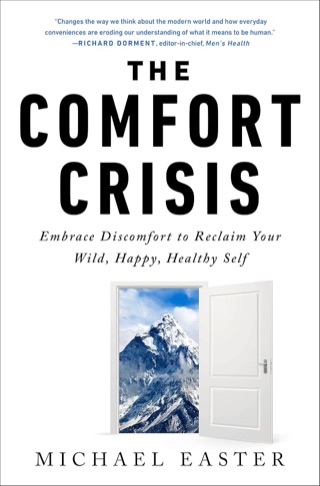
- The Comfort Crisis
- Breath

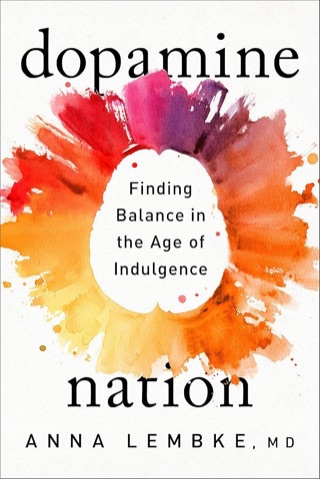
- Dopamine Nation
- Outlive

- Free Will

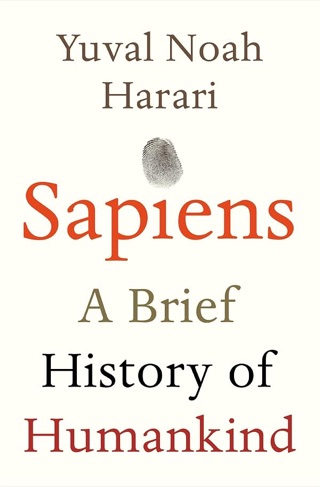
- Sapiens
Buddhist lives
and spiritual memoir.
What practice looks like as a lived life. These books give the traditions flesh and a human face.
- Dipa Ma

- In Love with the World

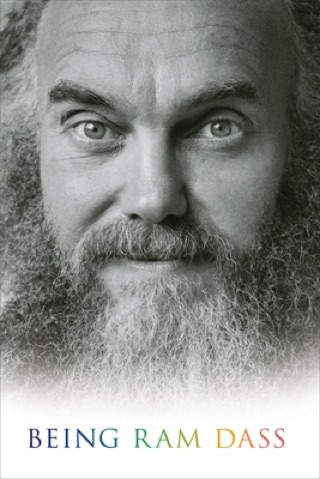
- Being Ram Dass
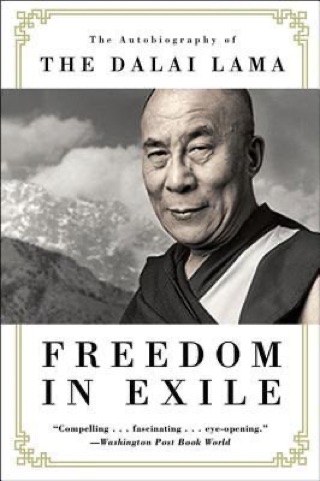
- Freedom in Exile
The research
behind the work.
The studies the method leans on, chosen for sport. Each title links to the paper itself, and the line under it says what the paper found.
Mindfulness training in athletes
- A meta-analysis of the intervention effect of mindfulness training on athletes’ performanceSi et al., 2024 · Frontiers in PsychologyAcross 11 studies with 582 athletes, mindfulness training raised performance and flow and lowered anxiety.
- The impact of mindfulness intervention on emotion regulation in athletes: a meta-analysisLi et al., 2026 · Frontiers in PsychologyAcross seven studies, mindfulness training improved how athletes regulate their emotions. The authors call the result preliminary.
- Effects of a mindfulness intervention on pre-competition mental states in youth athletes: a randomized controlled trialGuo, Zhong & Liu, 2026 · Frontiers in PsychologyIn 120 athletes aged 14 to 18, eight weeks of mindfulness lowered anxiety before competition and improved sleep and resilience, more in individual sports than in team sports.
- Mindfulness-Acceptance-Commitment intervention effects on athletic performance, passion, and psychological well-being in competitive tennis players: a randomized controlled trialAbidi et al., 2026 · Balneo and PRM Research JournalIn 44 competitive tennis players, seven weekly sessions of mindfulness and acceptance training improved serve performance. The control group’s serve did not change.
- Effect of mindfulness intervention on cognition and emotion in table tennis college athletes: a randomized controlled trialQian et al., 2026 · American Journal of Men’s HealthIn 90 table tennis players, 16 weeks of short sessions after training improved attention and memory and lowered mental fatigue and cortisol.
Attention in racket sports
- Attentional focus strategies in racket sports: a systematic reviewStarzak et al., 2024 · PLOS ONEAcross nine studies, focusing on the effect of the stroke helped racket sport skills more than focusing on the body’s own movement.
- Skill level in tennis serve return is related to adaptability in visual search behaviorRosker & Majcen Rosker, 2021 · Frontiers in PsychologyEye tracking on 1,020 returns: international players adjusted where they looked to each server more than national players did, and read the toss earlier.
- The farther, the better? The effect of attentional focus distance on motor performance: a systematic review and meta-analysisZang et al., 2025 · PeerJAcross 20 trials, a focus on something farther away helped performance more than an internal focus, and for experienced performers more than a near one.
- Quiet eye duration and gun motion in elite shotgun shootingCauser et al., 2010 · Medicine & Science in Sports & ExerciseElite shooters fixed their eyes on the target earlier and for longer than sub-elite shooters, and every shooter did so more on hits than on misses.
Pressure, fatigue and the daily log
- The anticipatory stress response to sport competition: a systematic review with meta-analysis of cortisol reactivityvan Paridon et al., 2017 · BMJ Open Sport & Exercise MedicineAcross 25 studies, cortisol rises before competition, the body’s way of preparing for what is coming.
- Does mental fatigue affect skilled performance in athletes? A systematic reviewSun et al., 2021 · PLOS ONEAcross 11 studies, mental fatigue lowered skilled performance in soccer, basketball and table tennis: less accuracy, slower execution.
- Exercise-induced fatigue impairs change of direction performance and serve precision among young male tennis playersBilić et al., 2023 · SportsIn 21 nationally ranked young players, a fatiguing run lowered serve precision and slowed change of direction.
- Monitoring the athlete training response: subjective self-reported measures trump commonly used objective measures: a systematic reviewSaw et al., 2016 · British Journal of Sports MedicineAcross 56 studies, how athletes say they feel tracked training load more sensitively and more consistently than blood markers or heart rate.
How the training works
- Mechanisms of mindfulness training: Monitor and Acceptance Theory (MAT)Lindsay & Creswell, 2017 · Clinical Psychology ReviewMindfulness works through two skills together: monitoring what is happening, and accepting it. Monitoring alone sharpens attention but can raise reactivity; acceptance brings it down.
- Moving beyond mindfulness: defining equanimity as an outcome measure in meditation and contemplative researchDesbordes et al., 2014 · MindfulnessDefines equanimity as an even-minded stance toward every experience, pleasant, unpleasant or neutral, and proposes it as something research should measure.
- The Eighty Five Percent Rule for optimal learningWilson et al., 2019 · Nature CommunicationsA study of learning models: training teaches fastest when it is hard enough to get about 15 percent wrong.